
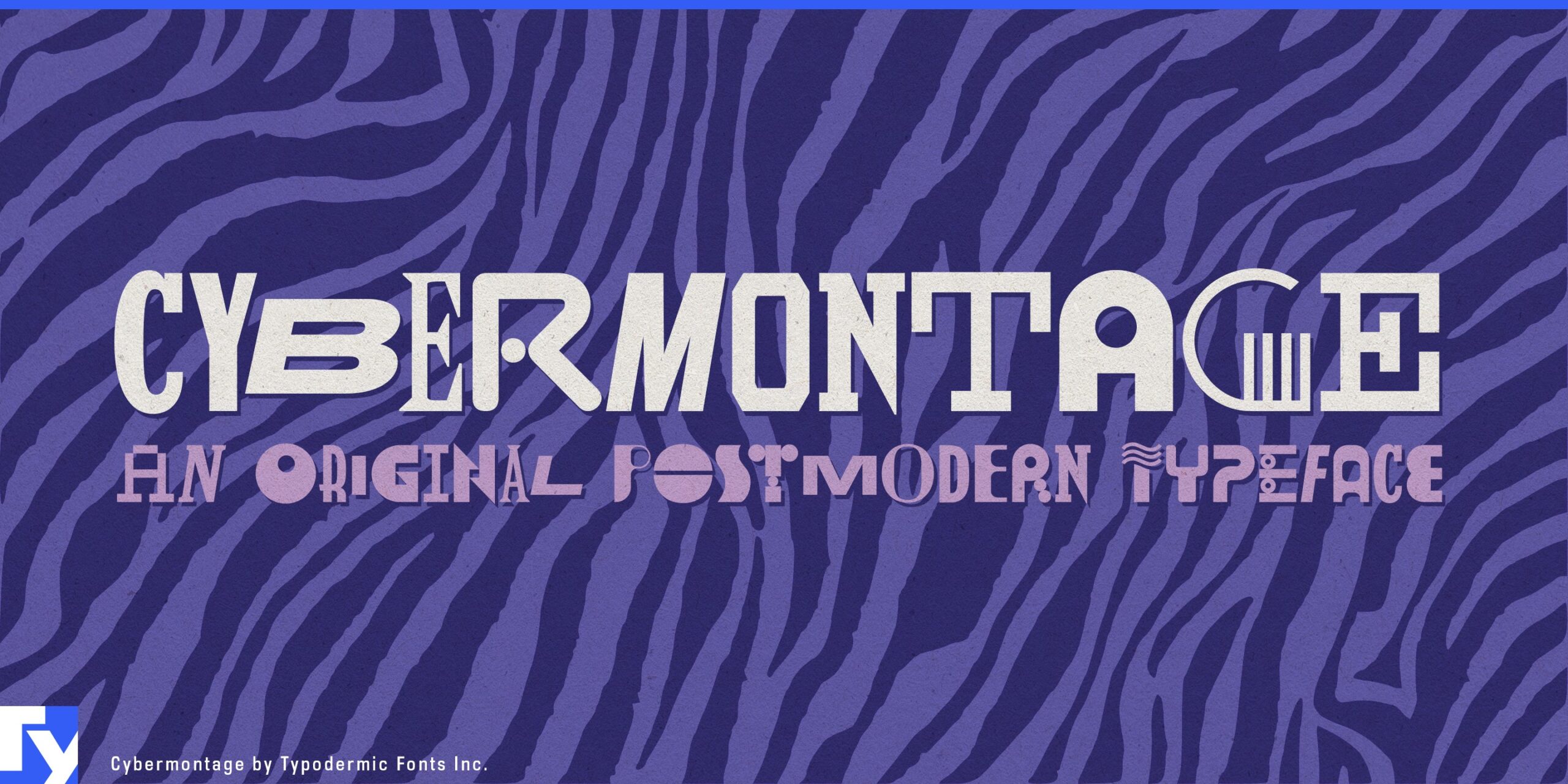
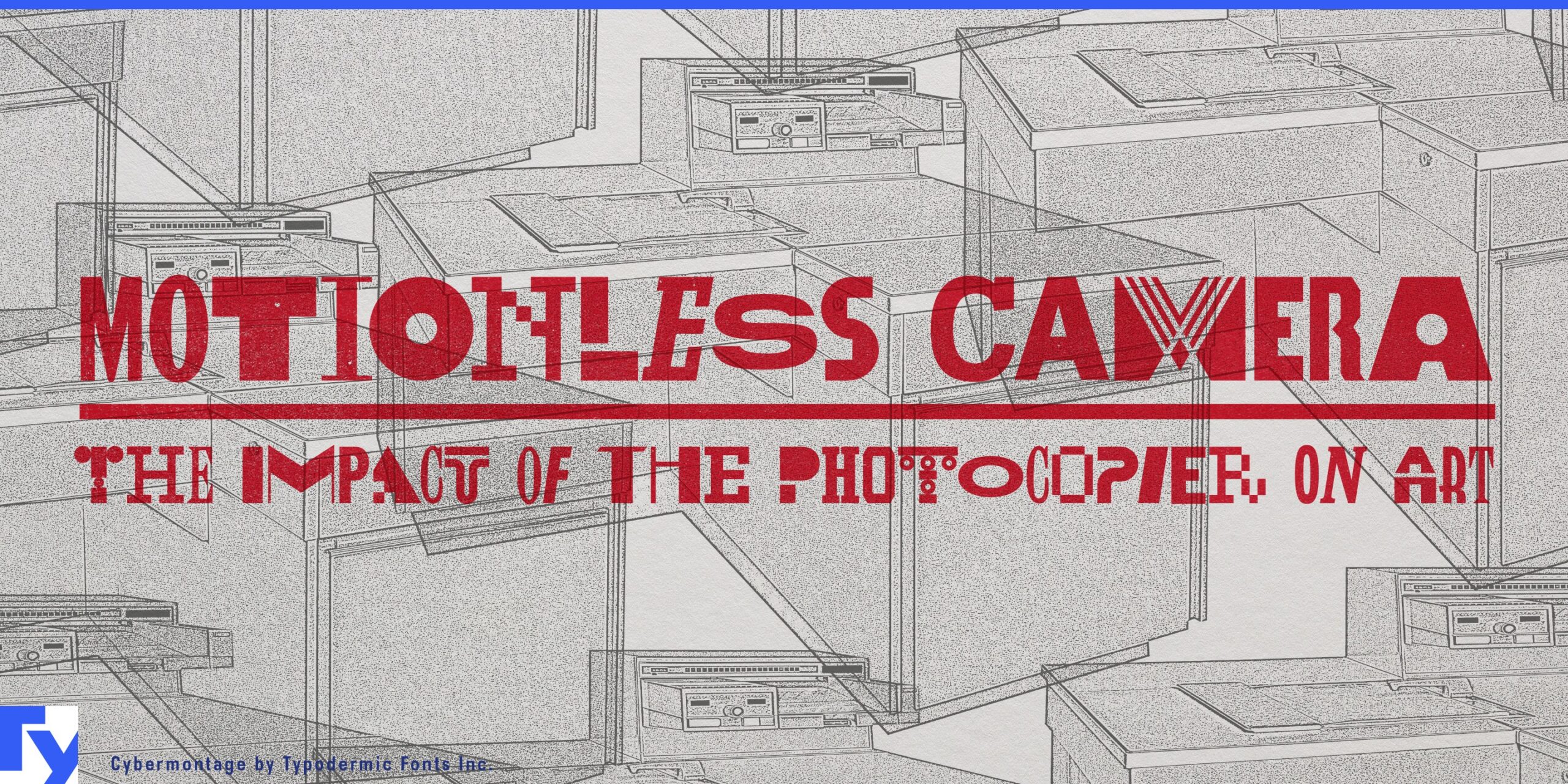
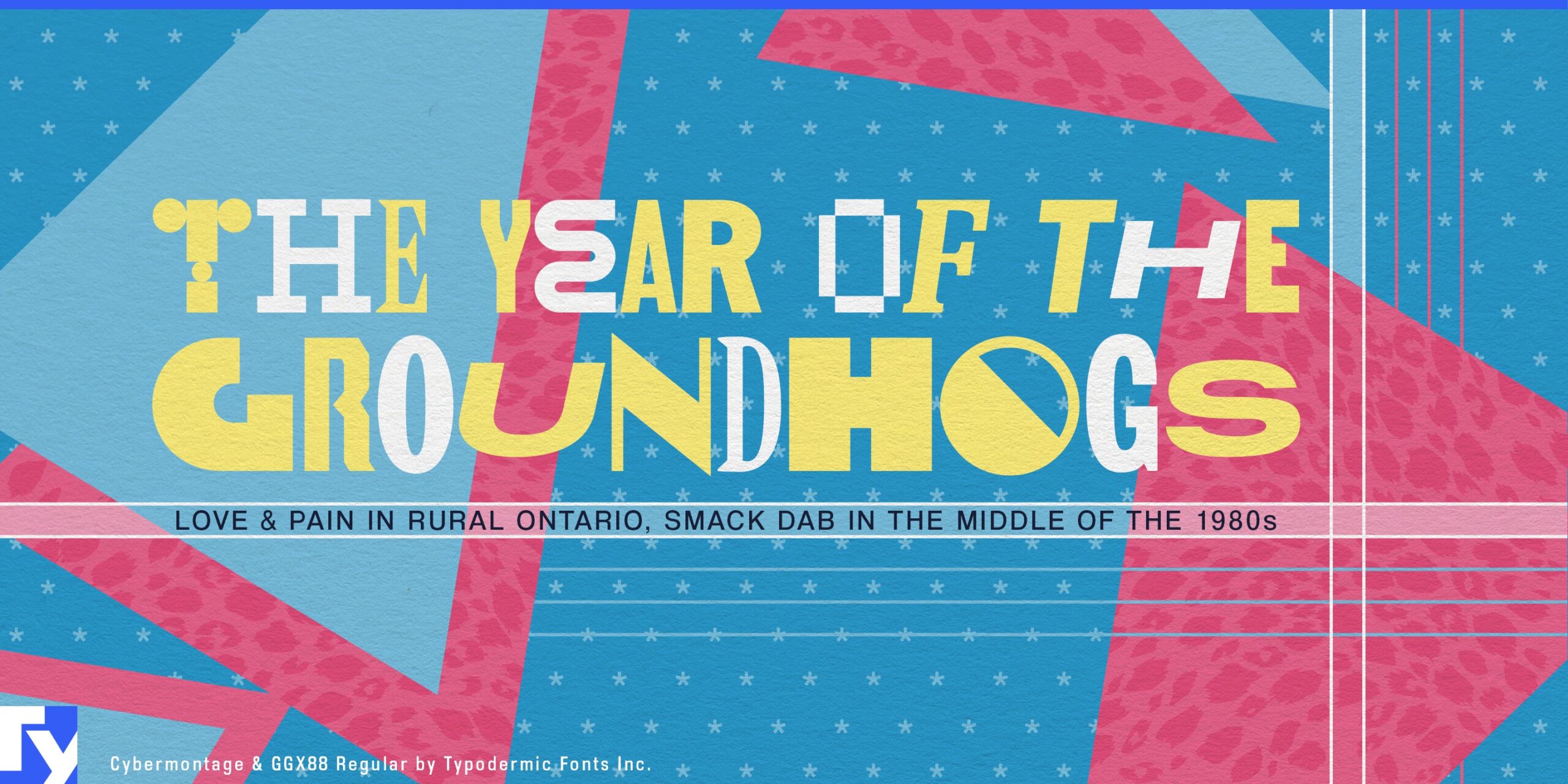
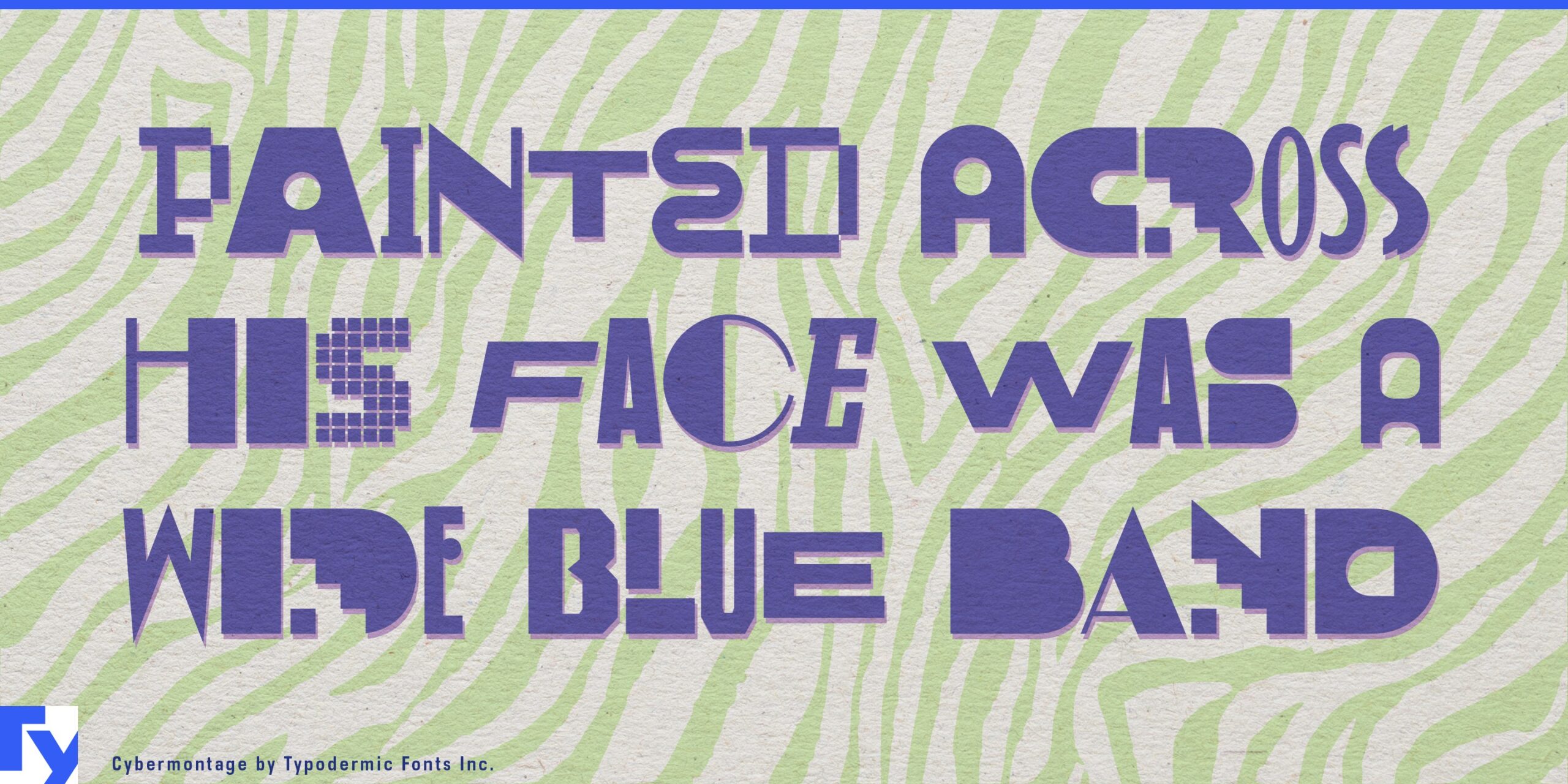
Cybermontage is a postmodern display typeface that thrives on contrast and contradiction. Its letterforms are a curated collision of influences—sleek geometric shapes, sharp deco flourishes, industrial tech fragments, and the occasional pixel grid—assembled with the deliberate eclecticism that defined late-80s and early-90s typography. It’s a visual remix of the Memphis design spirit, where “more” wasn’t a problem to solve but a principle to embrace.
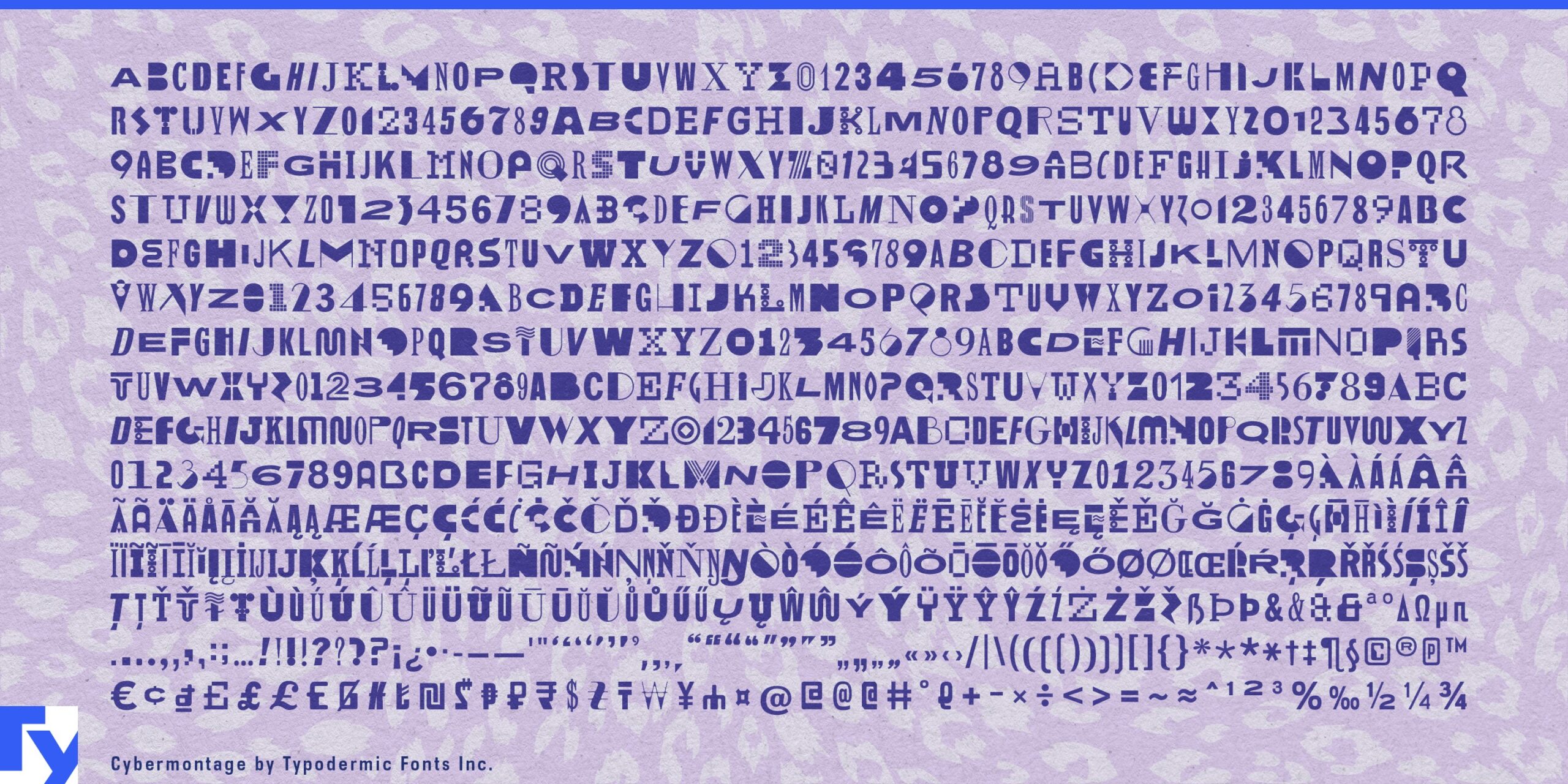
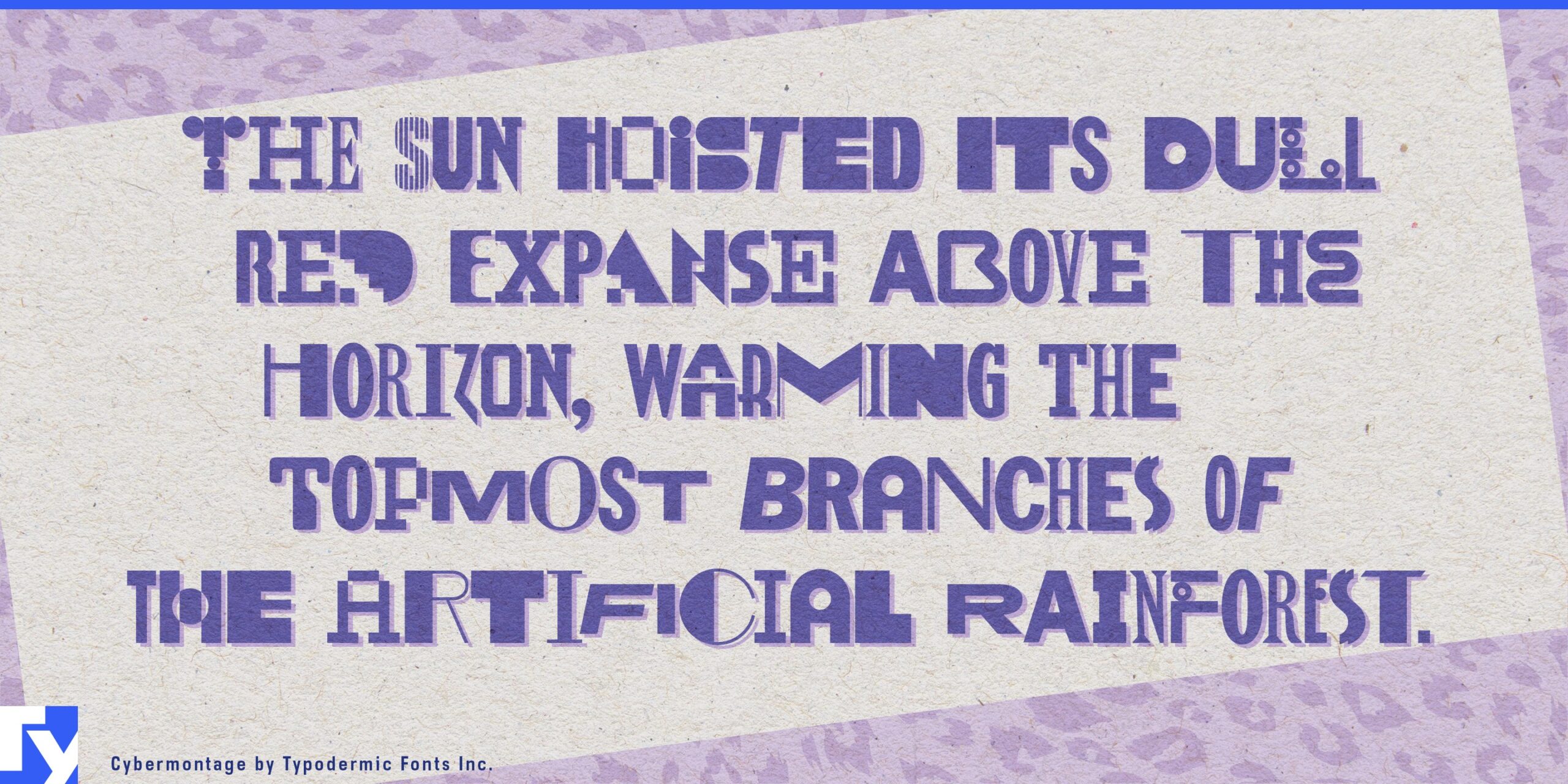
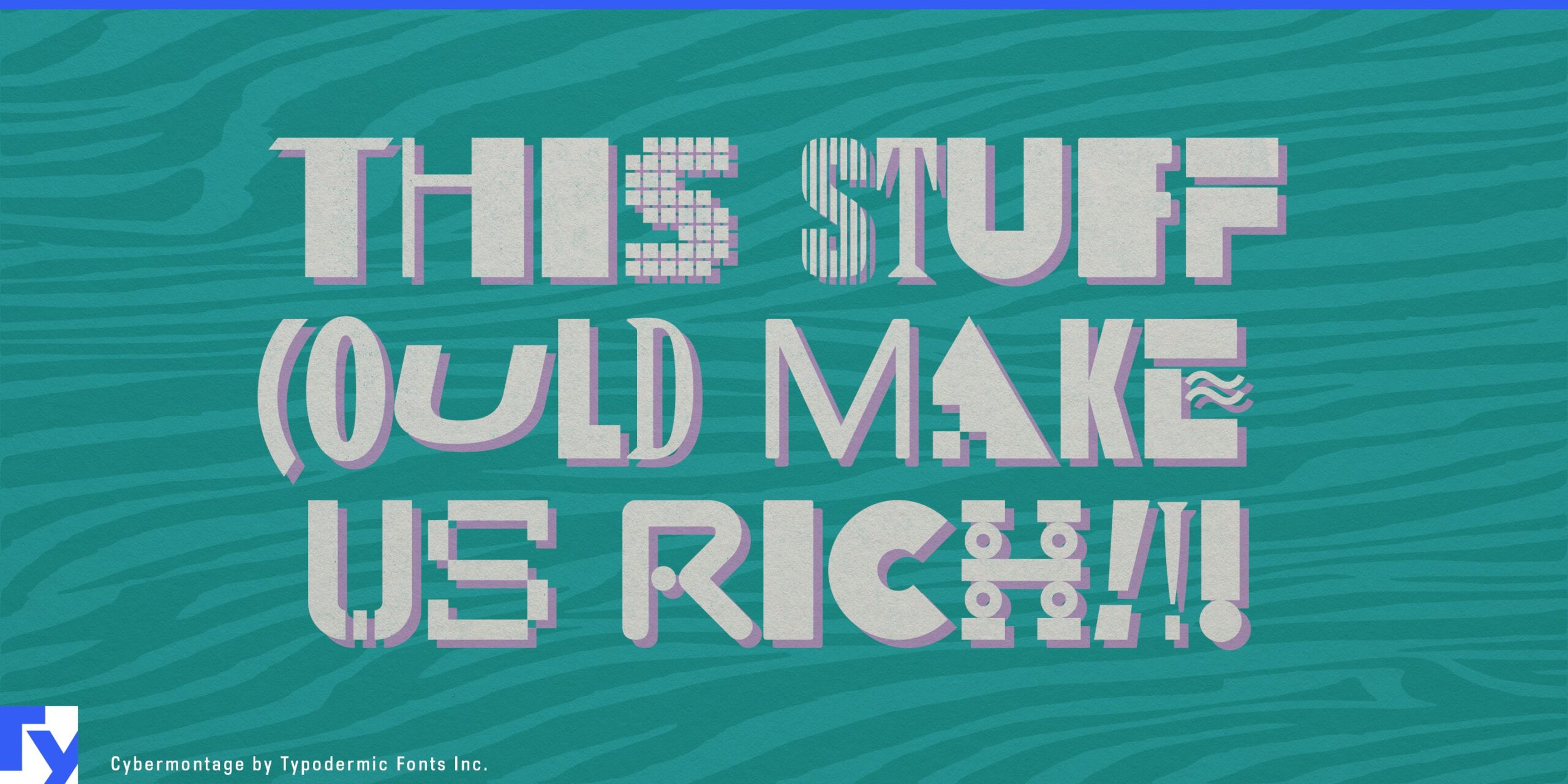
Each character in Cybermontage has seven alternate forms. Thanks to automatic contextual alternates, they shuffle dynamically as you type, producing a layout that feels improvised yet intentional—much like the cut-and-paste editorial work that inspired it. Even without smart-feature-aware software, every variation is accessible via PUA encoding, so you can still mix, match, and fine-tune your combinations by hand.
This is a typeface for projects that thrive on variety: music packaging with a restless energy, fashion editorials that refuse to settle on one mood, or cultural campaigns where visual unpredictability is part of the message. Cybermontage maintains coherence through shared proportions and a balanced weight system, so even at its most chaotic, it never collapses into visual noise.
Its character set spans over 100 Latin-based languages, making it just as comfortable on a São Paulo club poster as in a Helsinki design magazine. Use it to create typographic compositions that feel global, electric, and alive—without resorting to nostalgia or pastiche.
Cybermontage isn’t just a font; it’s a framework for controlled visual disorder, built for designers who understand that variety isn’t the enemy of clarity—it’s the catalyst for attention.