
Larabiefont
Get the font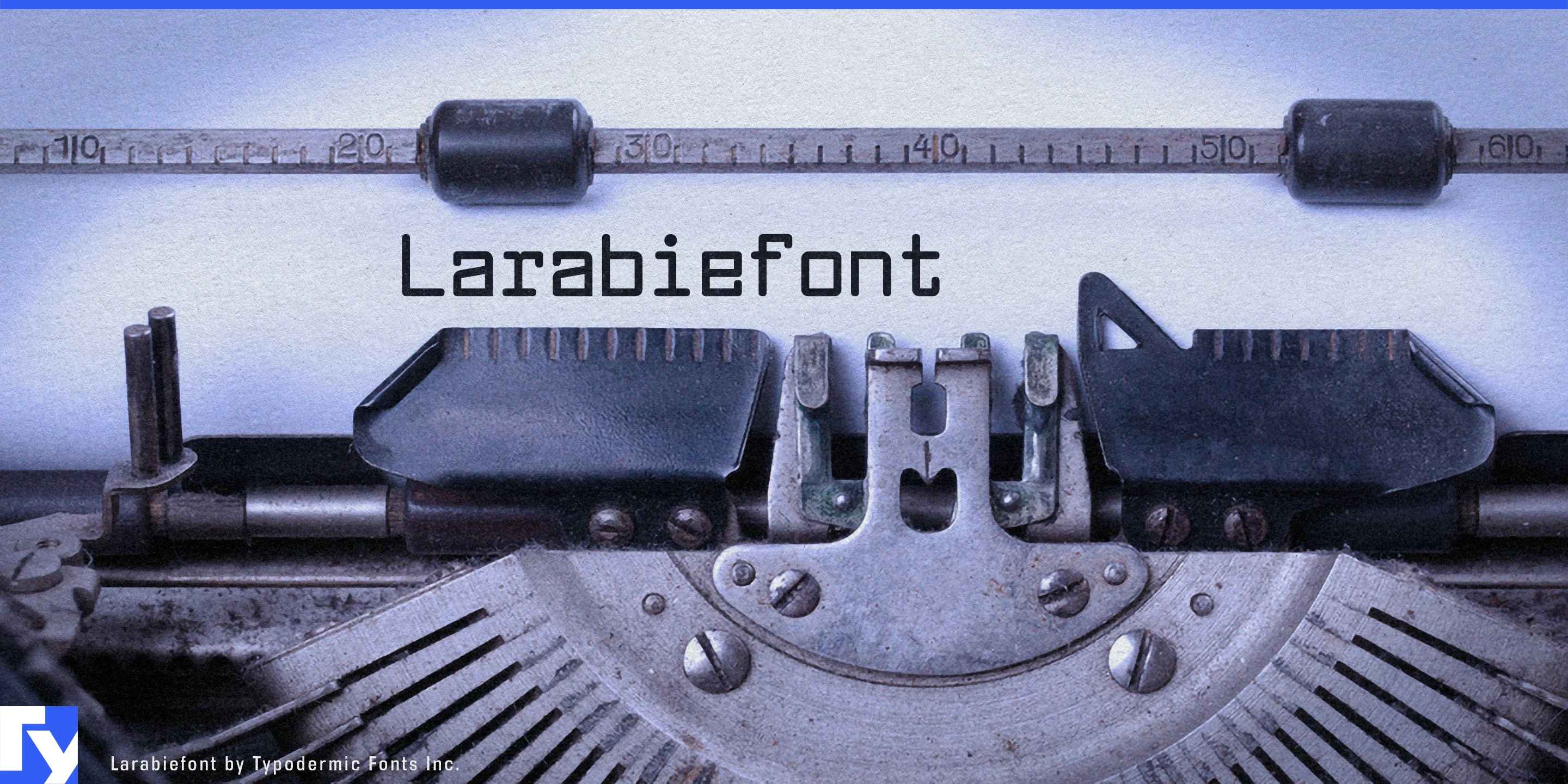
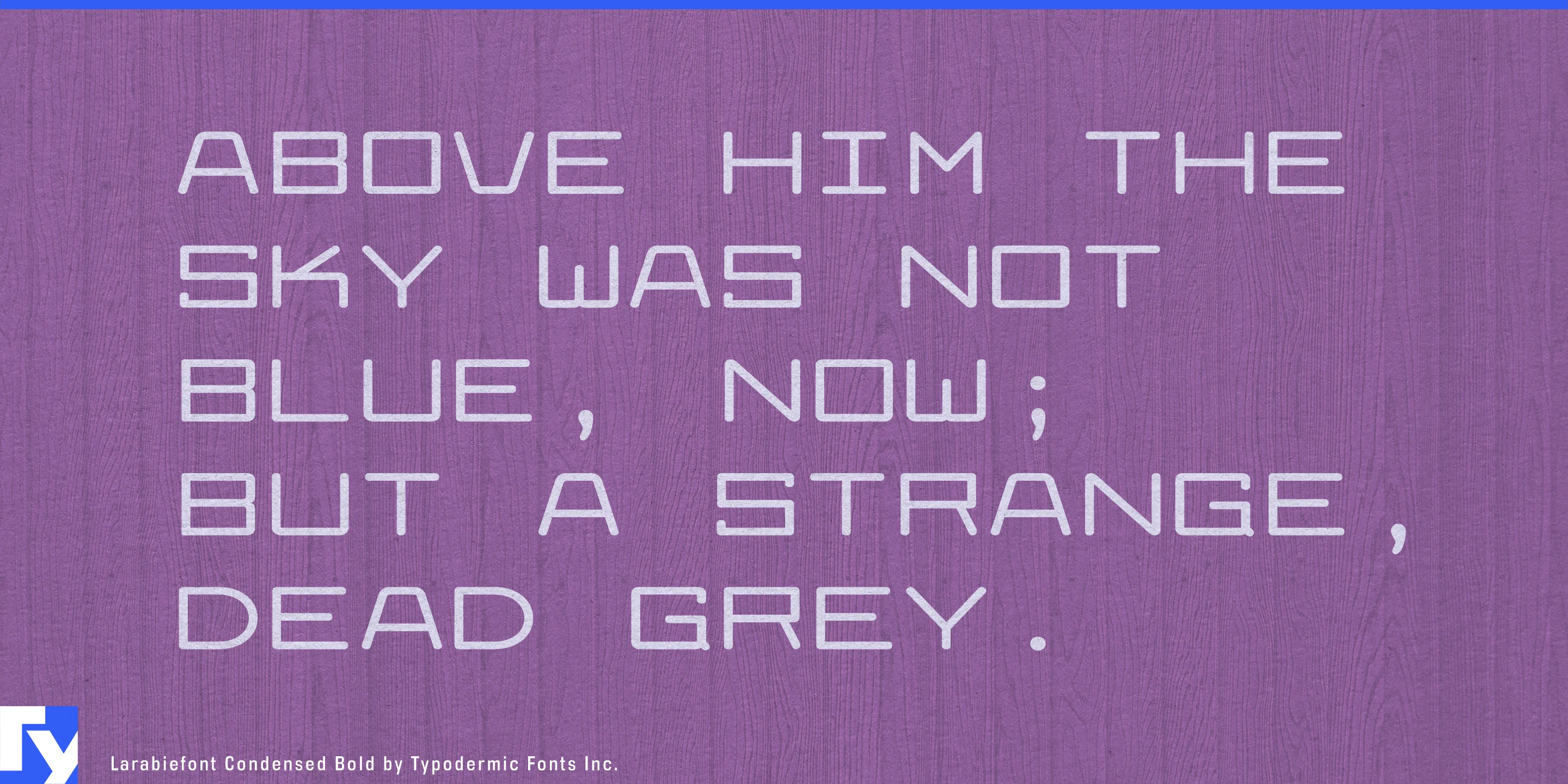
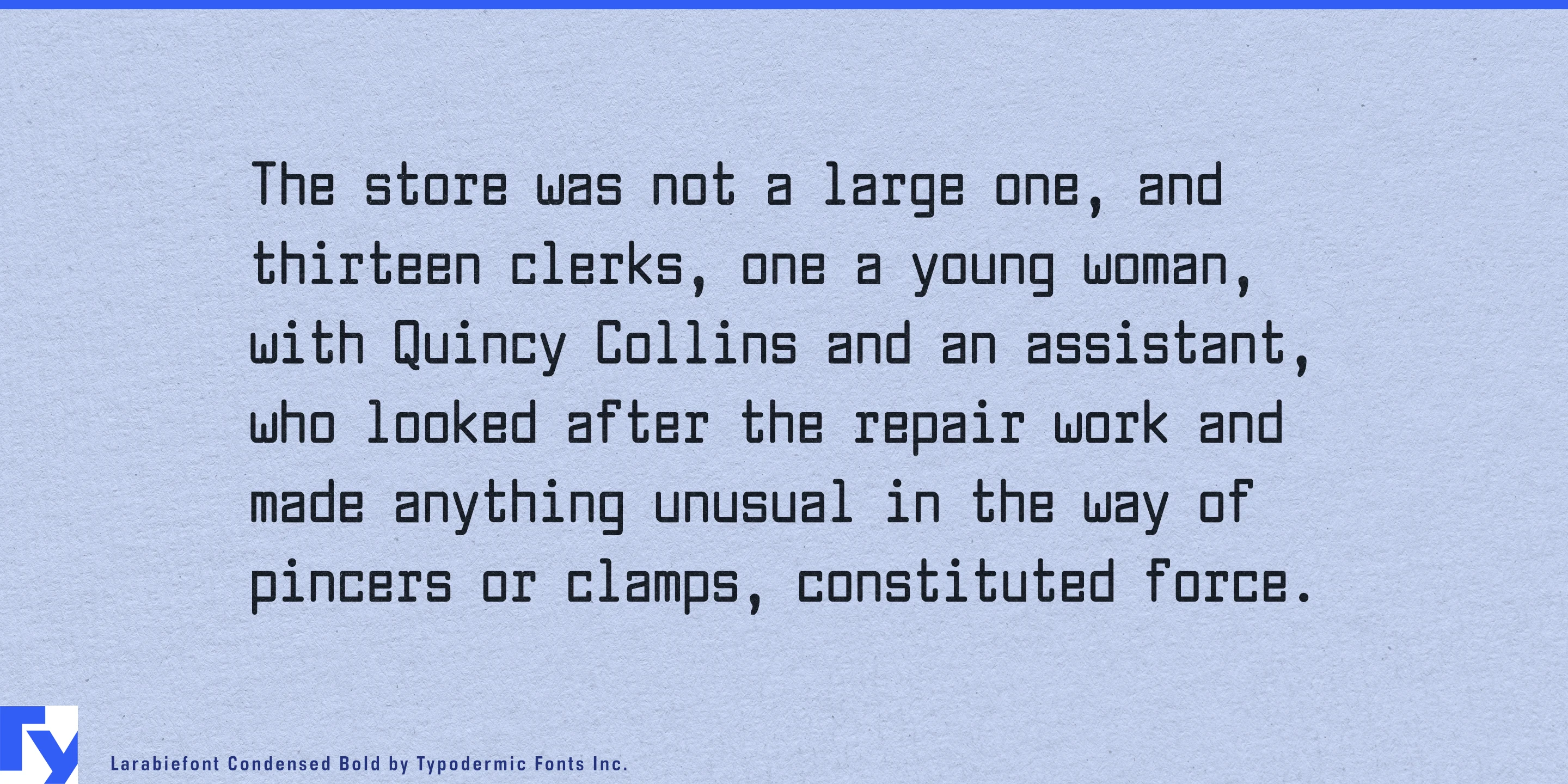
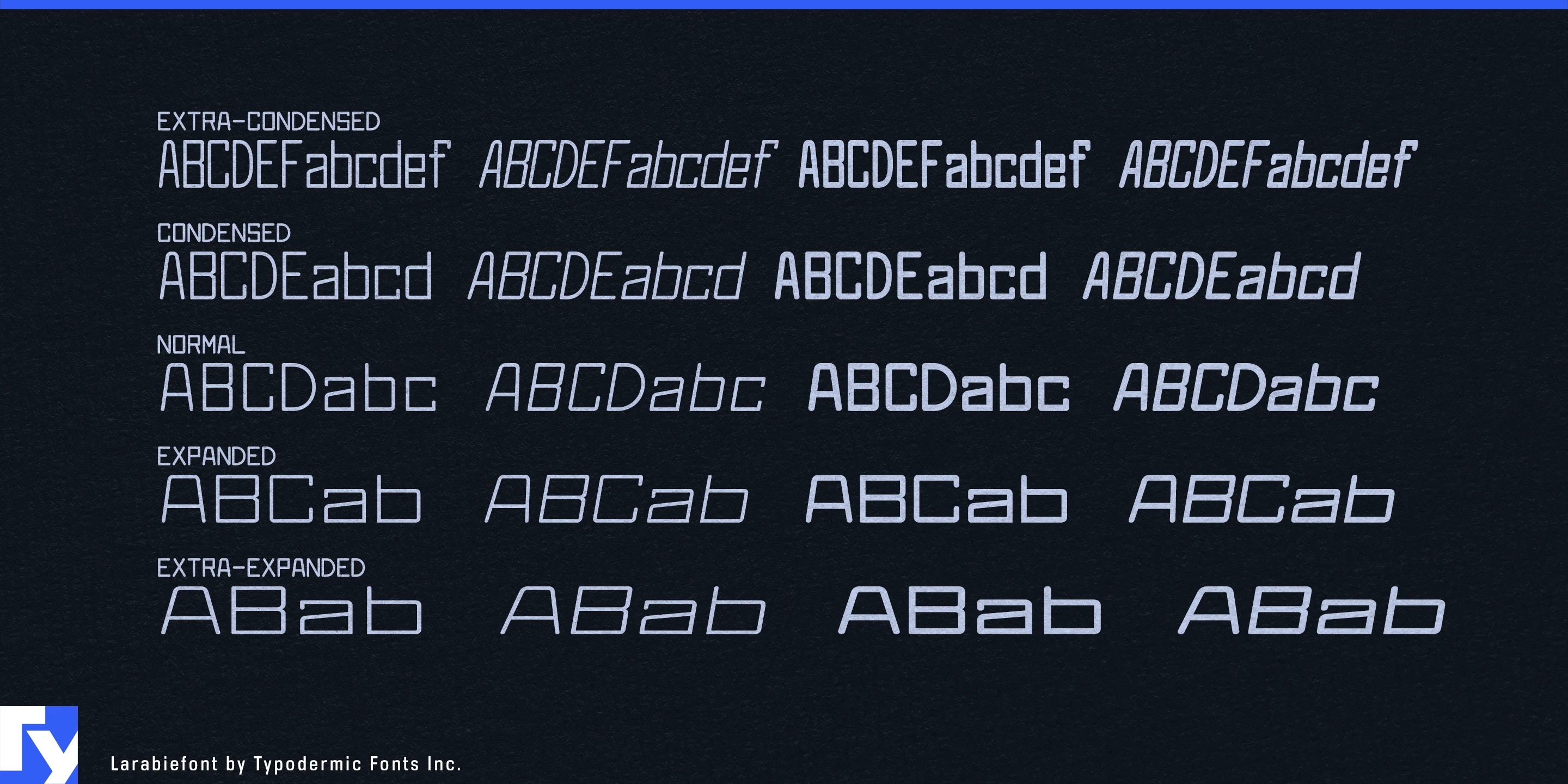
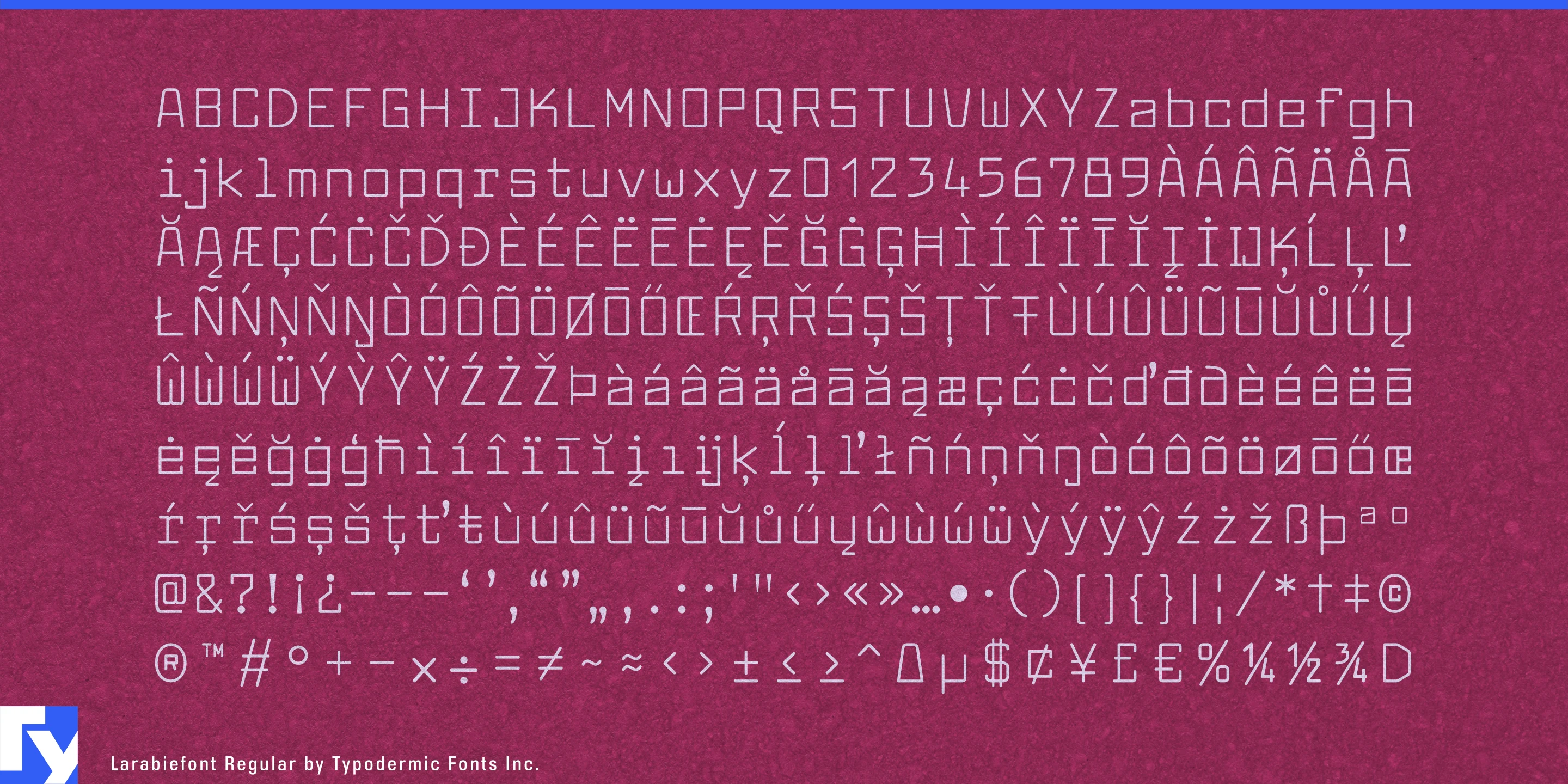

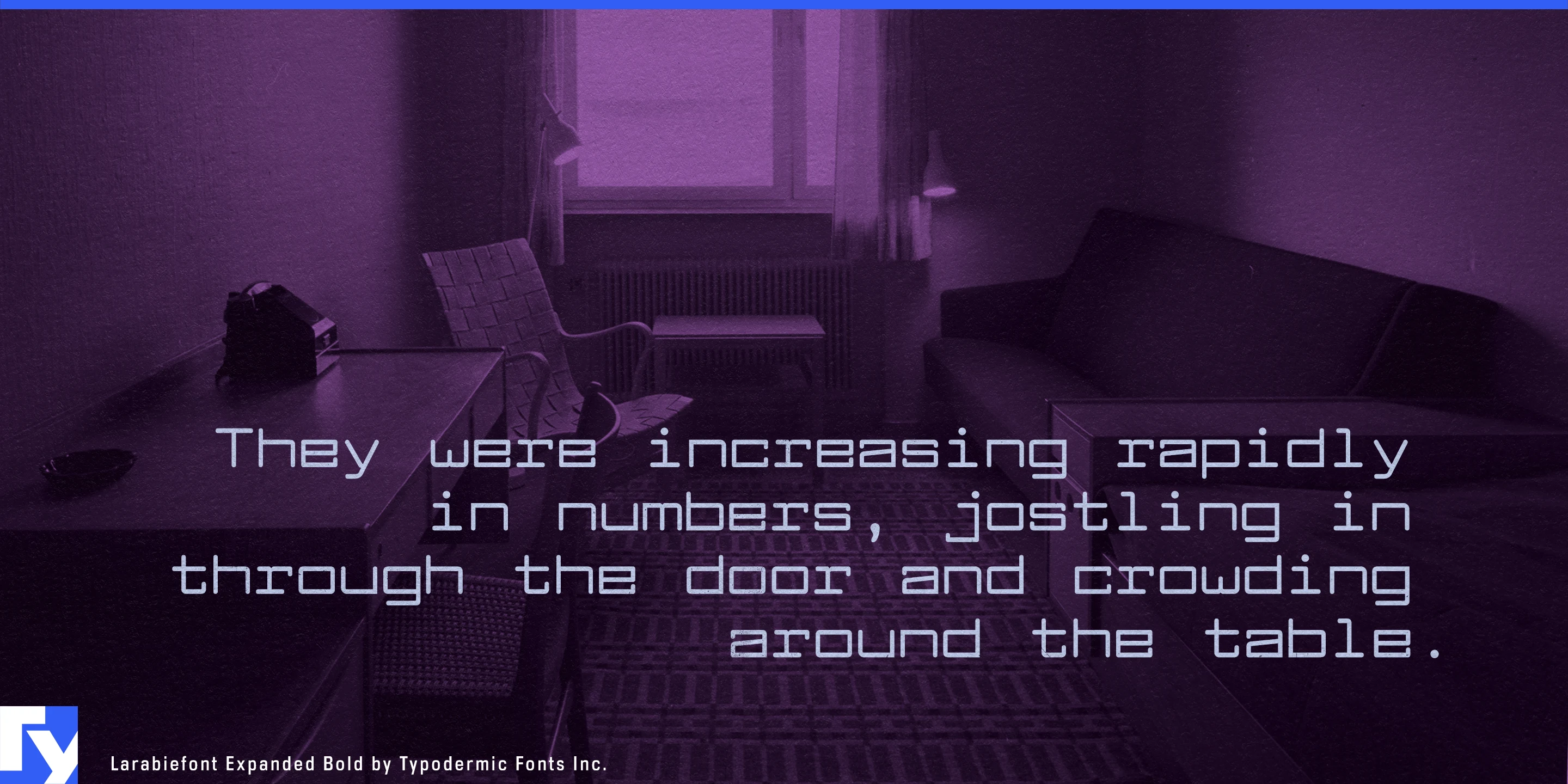
Technical brands often need the same visual language to survive very different physical spaces. A model number may have to fit into a narrow control-panel strip; a product name may need to stretch across a broad equipment housing; exhibition graphics may demand something wider still. A conventional monospaced face gives the designer one fixed proportion. Larabiefont turns width into part of the system, ranging from Extra-Condensed through Extra-Expanded while preserving the same squared, machine-oriented construction.
That makes Larabiefont particularly useful for test and measurement equipment. Oscilloscopes, spectrum analyzers, bench power supplies, battery-testing systems, calibration instruments, environmental data loggers, semiconductor inspection tools, metrology equipment, and laboratory hardware all combine cramped identifiers with much larger product surfaces. Extra-Condensed and Condensed styles can handle rack-unit labels, model numbers, narrow headings, and equipment diagrams; Expanded and Extra-Expanded can carry product-family names, launch graphics, booth displays, and large technical headings.
Professional audio and electronic music hardware presents a similar problem. Synthesizers, grooveboxes, audio interfaces, effects processors, mixing controllers, signal processors, modular systems, and stage-lighting hardware vary enormously in shape. A narrow rack unit and a broad desktop instrument may belong to the same product family but offer completely different typographic real estate. Larabiefont’s width range lets model names, control-panel headings, series identifiers, packaging, manuals, and exhibition graphics adapt without abandoning the family’s visual language.
Field communications and surveying equipment provide another natural territory. Satellite communicators, GNSS receivers, rugged radios, marine electronics, drone ground-control hardware, mapping instruments, inspection cameras, and portable scientific equipment all rely on terse identifiers and highly organized visual systems. Larabiefont’s machine-age ancestry gives those applications a recorded, instrumental quality without imitating terminal pixels, military stencils, or conventional coding fonts.
Industrial automation extends the same logic into the factory. Machine-vision cameras, robot controllers, CNC systems, automated inspection equipment, pick-and-place machines, laser measuring systems, and fabrication equipment need typography across housings, panels, cases, technical literature, and trade-show environments. Different widths can take on different spatial jobs while still reading as one coherent system.
Larabiefont grew from the severe lettering associated with the Olympia Senatorial typewriter, sometimes nicknamed the “robot font.” That heritage helps explain its unusual relationship with technology: historical without becoming nostalgic, and futuristic without relying on familiar science-fiction clichés.
Larabiefont’s strength is not simply that it is monospaced or technical. It gives equipment manufacturers, engineering organizations, and technology-focused institutions a machine-oriented display system that can expand or contract with the object carrying it.
Get Larabiefont
Desktop licenses cover print, logos, and static graphics. MyFonts also offers embedding licenses for websites, e-books, and applications. Embedding licenses
Commercial font facts
Family details
- First released
- 1998
- Styles
- 20 styles
- Version
- 2.500
- Formats
- OTF
- Class
- Sans serif
- Form
- Rounded
- Width
- Mixed
- Case
- Mixed case
- Spacing
- Monospaced
- Scripts
- Latin
- Role
- Display
- Features
- Open counters
Commercial style names (20)
- Extra-Condensed
- Extra-Condensed Italic
- Extra-Condensed Bold
- Extra-Condensed Bold Italic
- Condensed
- Condensed Italic
- Condensed Bold
- Condensed Bold Italic
- Regular
- Italic
- Bold
- Bold Italic
- Expanded
- Expanded Italic
- Expanded Bold
- Expanded Bold Italic
- Extra-Expanded
- Extra-Expanded Italic
- Extra-Expanded Bold
- Extra-Expanded Bold Italic