
Chainprinter
Get the font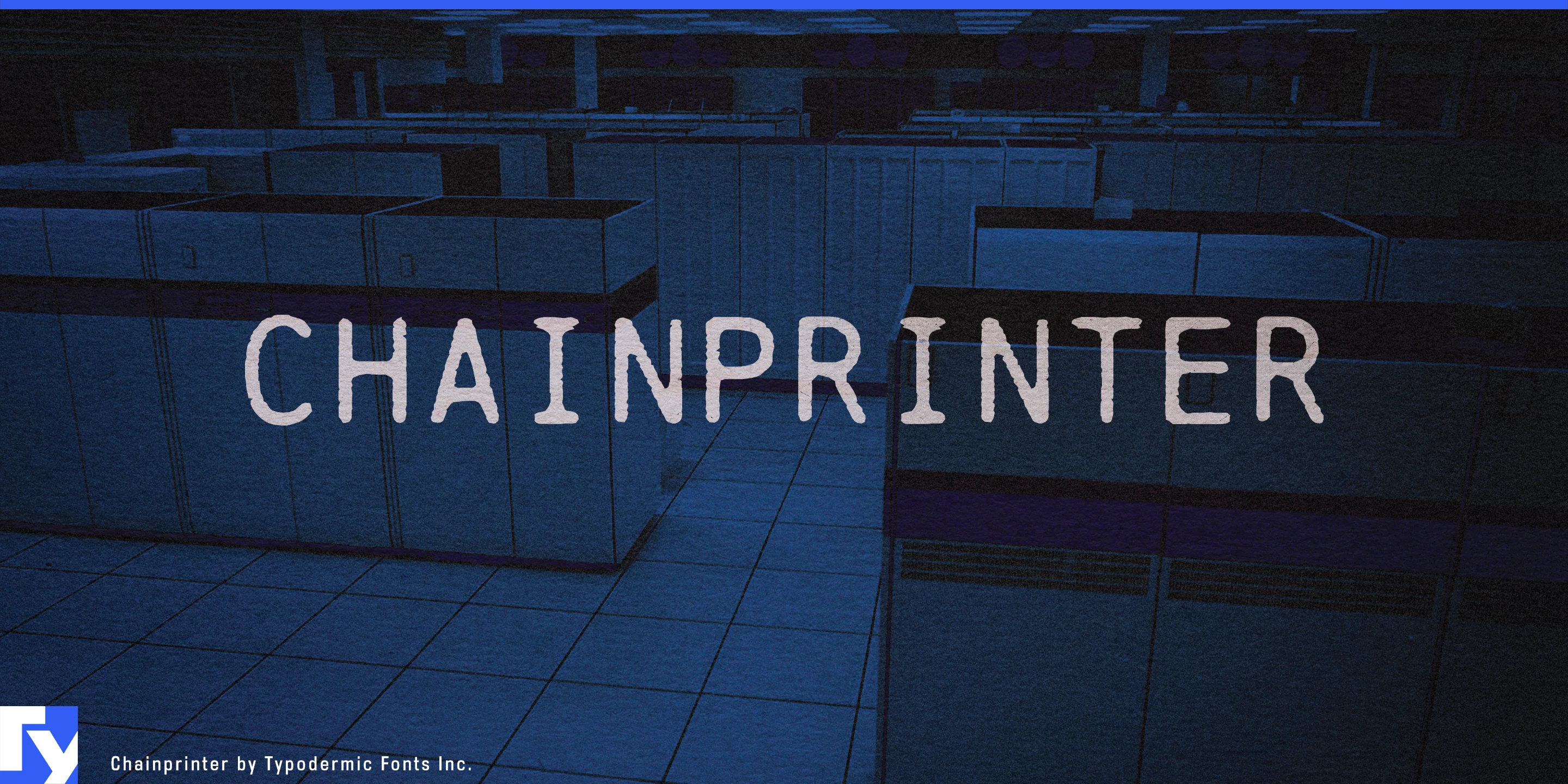
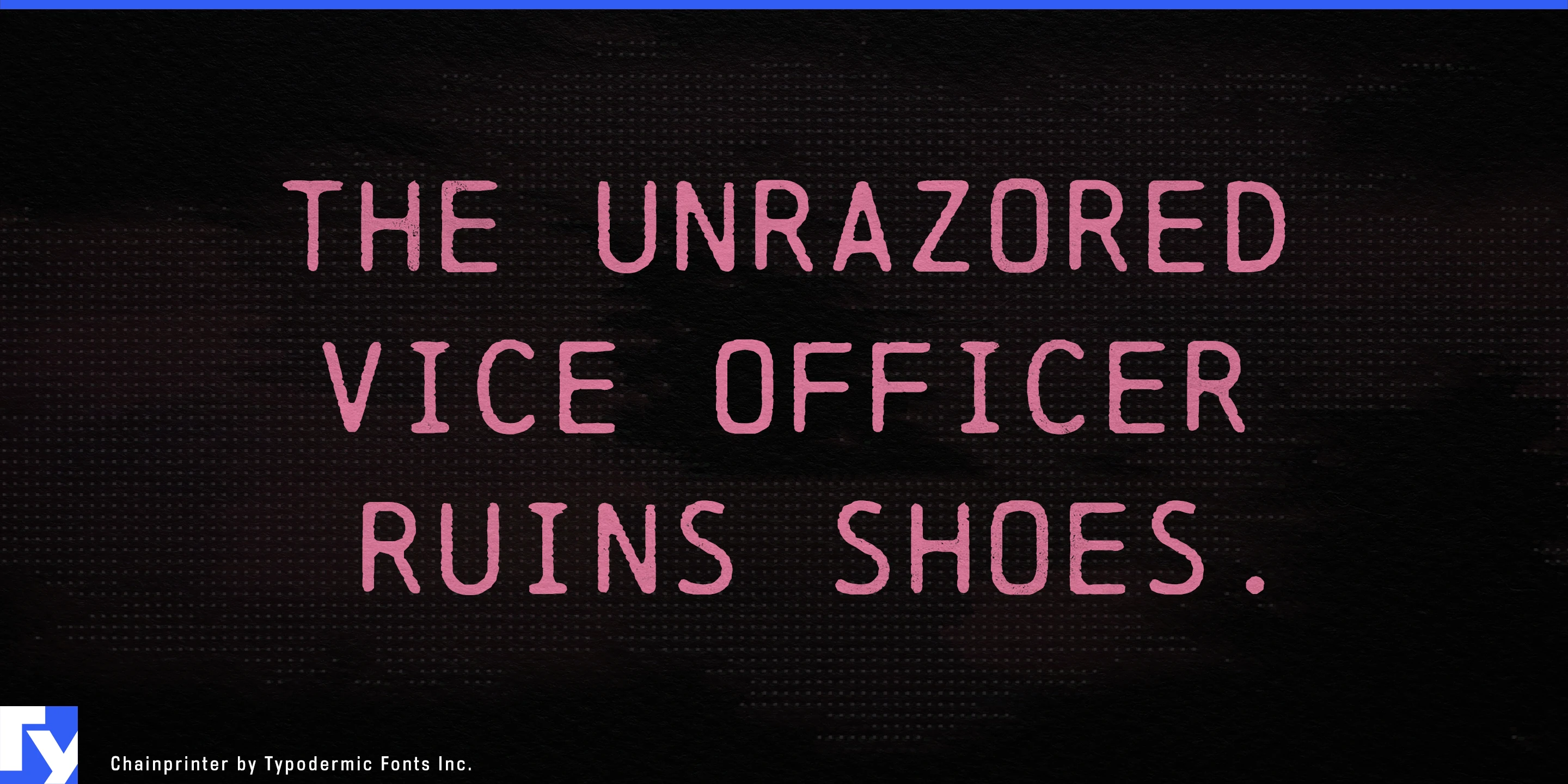
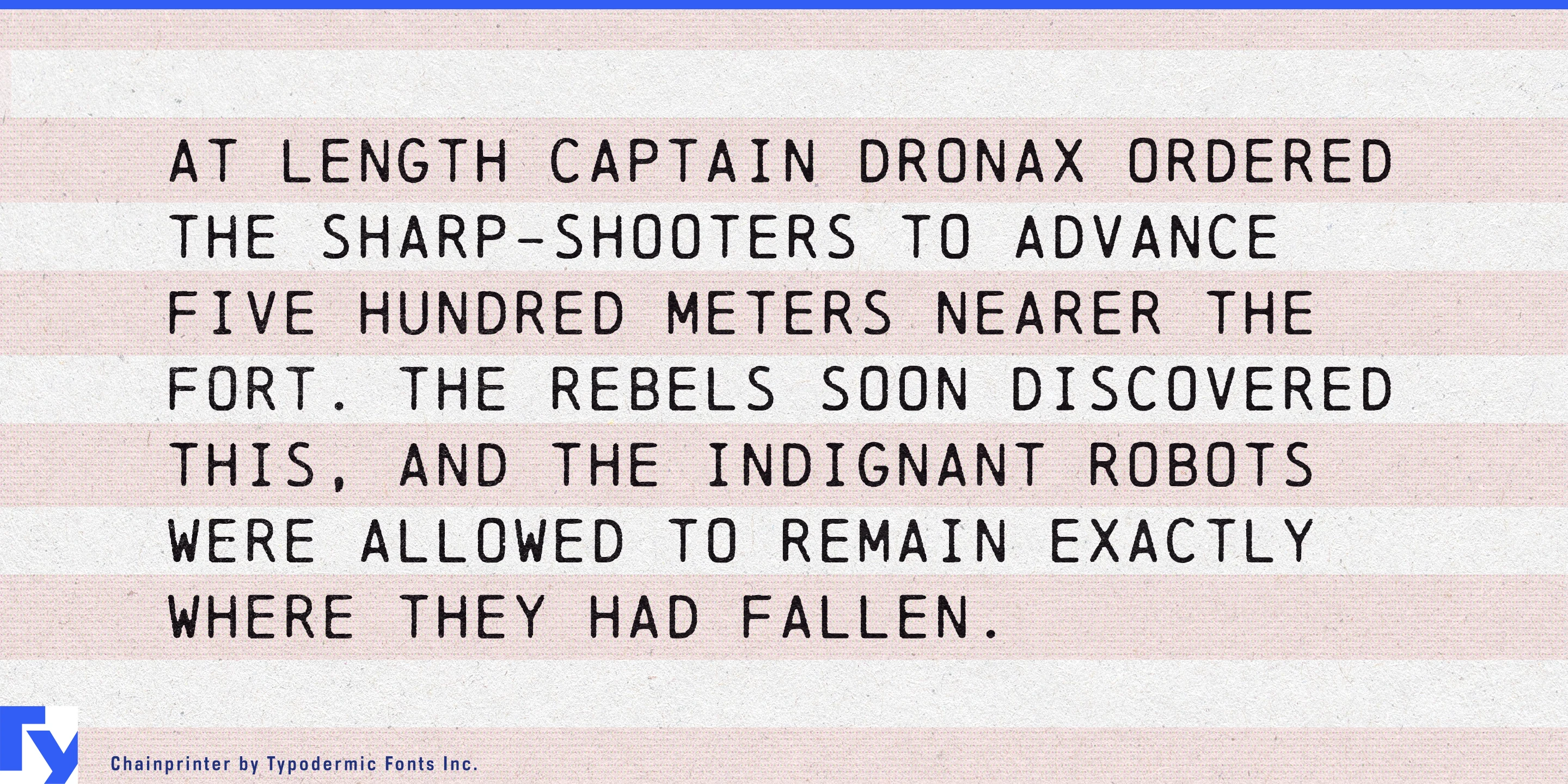

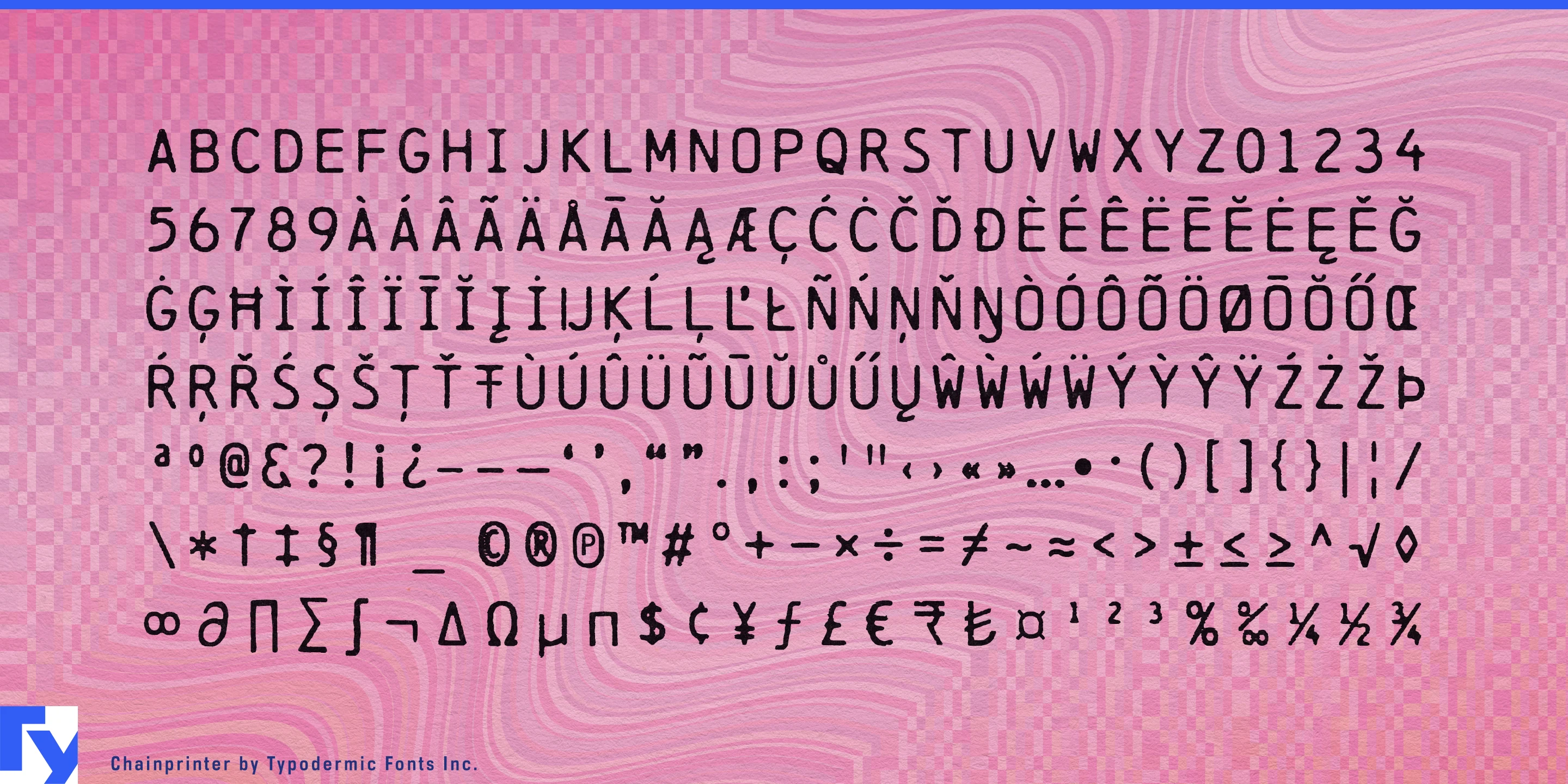
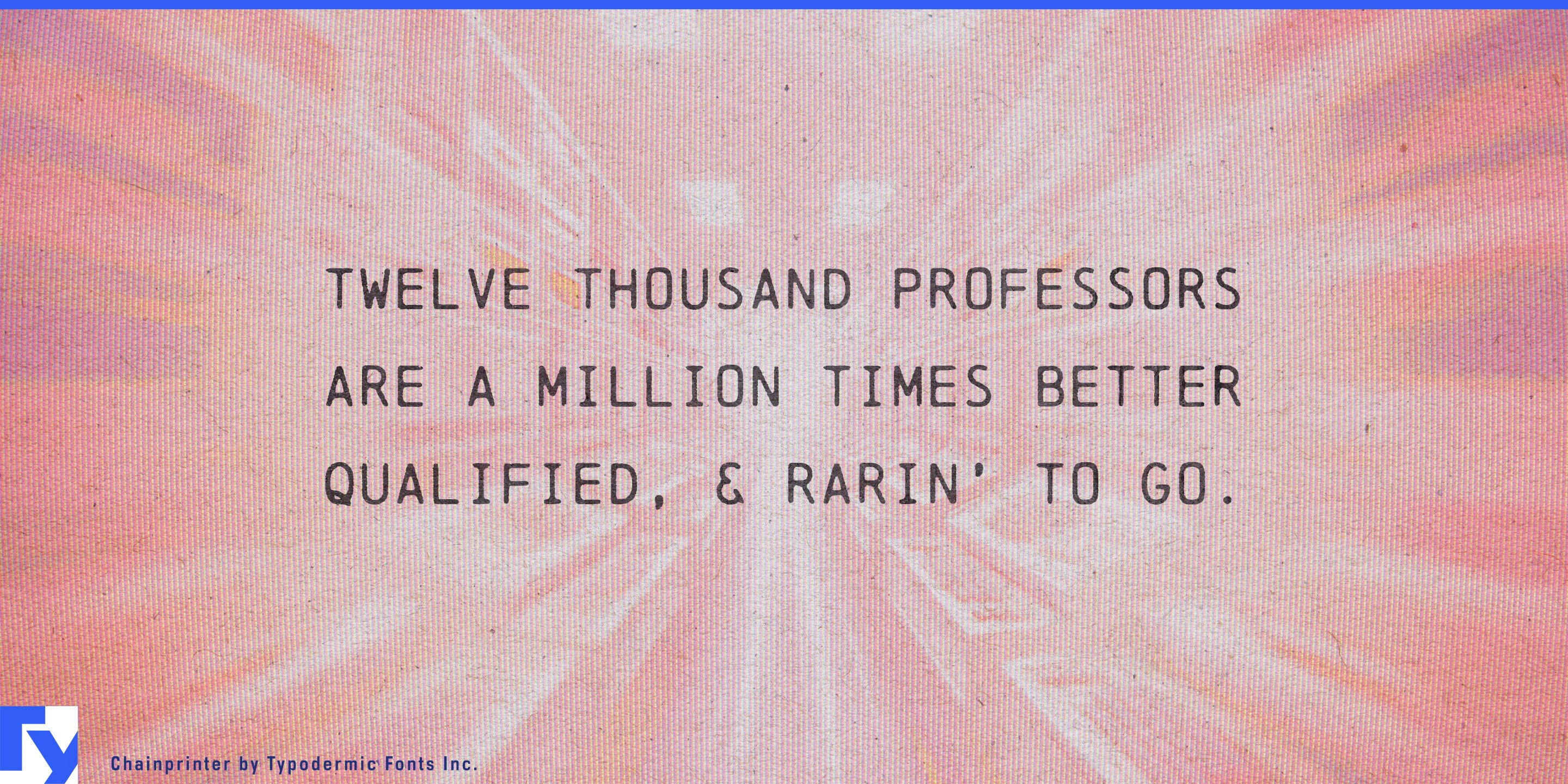
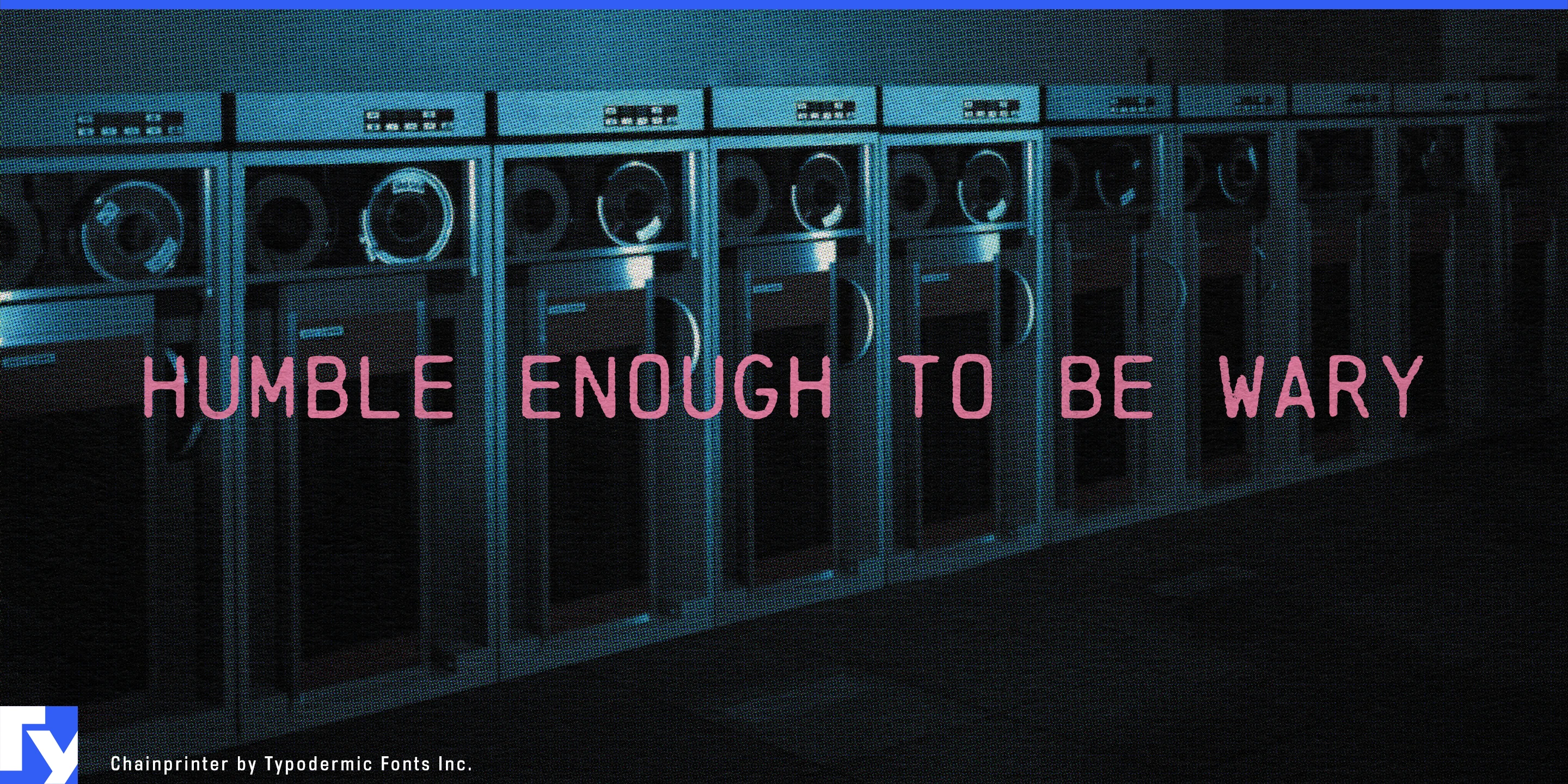
Chainprinter comes from an era when computer output arrived on paper and announced itself from across the room. High-speed chain printers drove rows of characters past an ink ribbon while hammers struck the sheet from behind, turning vast quantities of data into stacks of tightly spaced uppercase text. Chainprinter preserves the look of that output: narrow monospaced capitals, softened corners, uneven ink, and the small distortions left by machinery working quickly rather than delicately.
The wear is built into the letterforms themselves. Chainprinter doesn’t look like a clean computer font covered with a generic distress texture; its edges have the rounded, slightly battered quality of characters repeatedly transferred through ribbon and paper. The result is rough enough to carry a sense of age, but controlled enough for bylines, captions, credits, dates, specifications, and short passages.
That balance makes Chainprinter a useful companion to more aggressive distressed display faces. A conventional sans can look too polished beneath a weathered headline, while another heavily damaged font may leave the entire layout fighting for attention. Chainprinter continues the mechanical texture at a quieter level, keeping supporting information legible without breaking the atmosphere.
Its compressed capitals are particularly suited to denim, workwear, and streetwear. On a jeans patch, hangtag, garment label, size panel, or limited-edition drop card, Chainprinter has the character of a model number stamped into an old manufacturing record. It works naturally with lot codes, fabric specifications, production dates, serial numbers, and compact blocks of utility copy.
Chainprinter can also provide the informational layer in espionage, surveillance, and conspiracy-themed design. Intelligence files, interview transcripts, evidence labels, personnel records, and classified-project graphics benefit from lettering that appears to have been processed by an institution rather than composed for decoration. A typewriter face suggests one operator preparing a document at a desk; Chainprinter suggests a system producing records by the thousand.
That institutional quality carries into contemporary cybersecurity and data-privacy graphics. Incident reports, threat-intelligence materials, fictional breach records, security-conference identities, and investigation-game documents can use its paper-based computing aesthetic as an alternative to the familiar green terminals, pixel fonts, and digital glitches.
For historically minded work, Chainprinter belongs to the mainframe room rather than the home computer desk. It suits computer-history exhibits, Cold War research documents, early artificial-intelligence stories, laboratory records, and period props for film, television, games, and escape rooms. Its all-caps design is part of that identity; for a cleaner interpretation of the same mechanical idea with uppercase and lowercase, its sibling Linefeed provides the full-case alternative.
Get Chainprinter
Desktop licenses cover print, logos, and static graphics. MyFonts also offers embedding licenses for websites, e-books, and applications. Embedding licenses
Commercial font facts
Family details
- First released
- 2006
- Styles
- 1 style
- Version
- 2.100
- Formats
- OTF
- Class
- Sans serif
- Width
- Condensed
- Case
- All caps
- Spacing
- Monospaced
- Scripts
- Latin
- Role
- Display
- Features
- Distressed
Commercial style names (1)
- Regular