
Antihistory
Get the font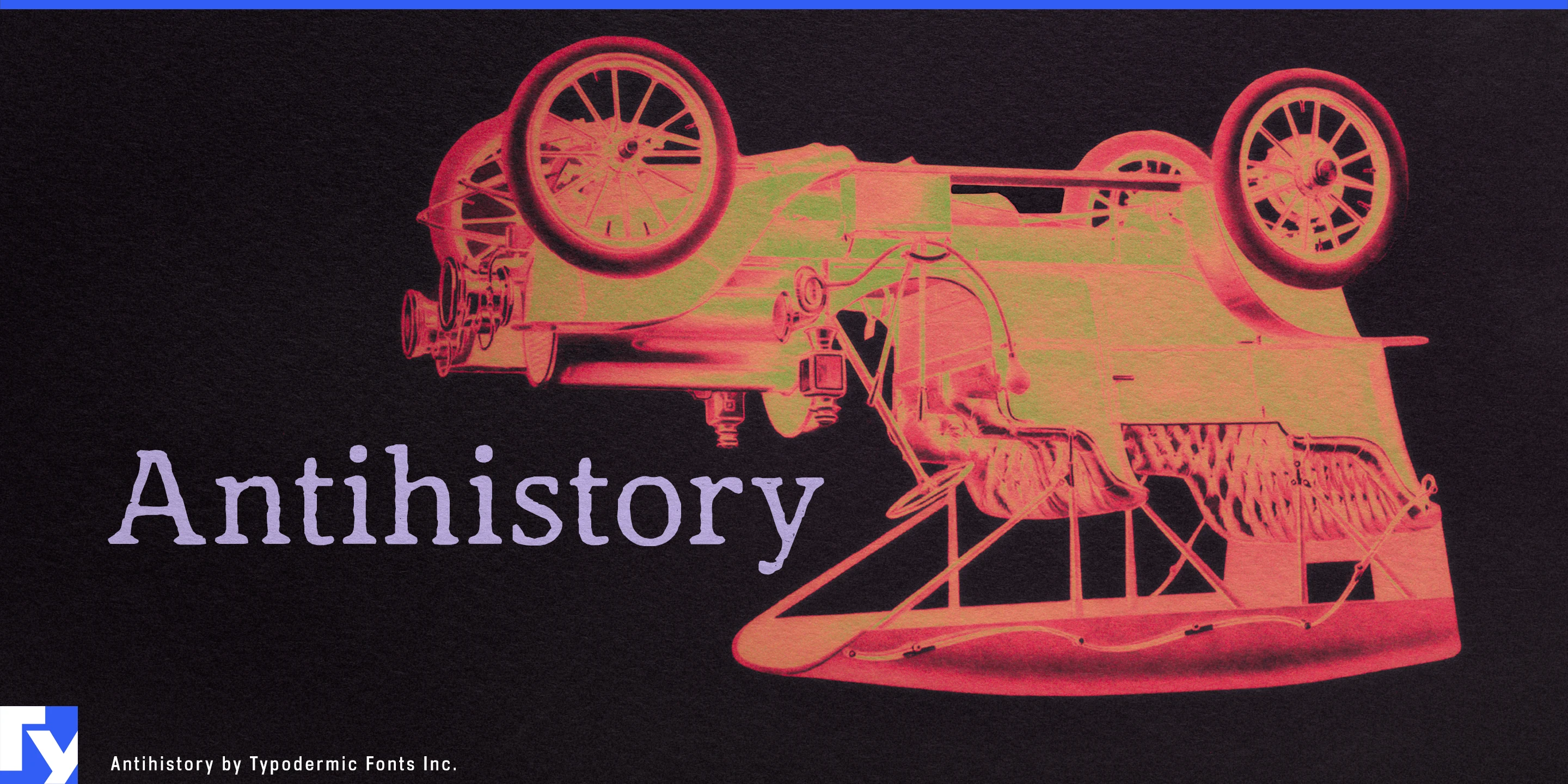
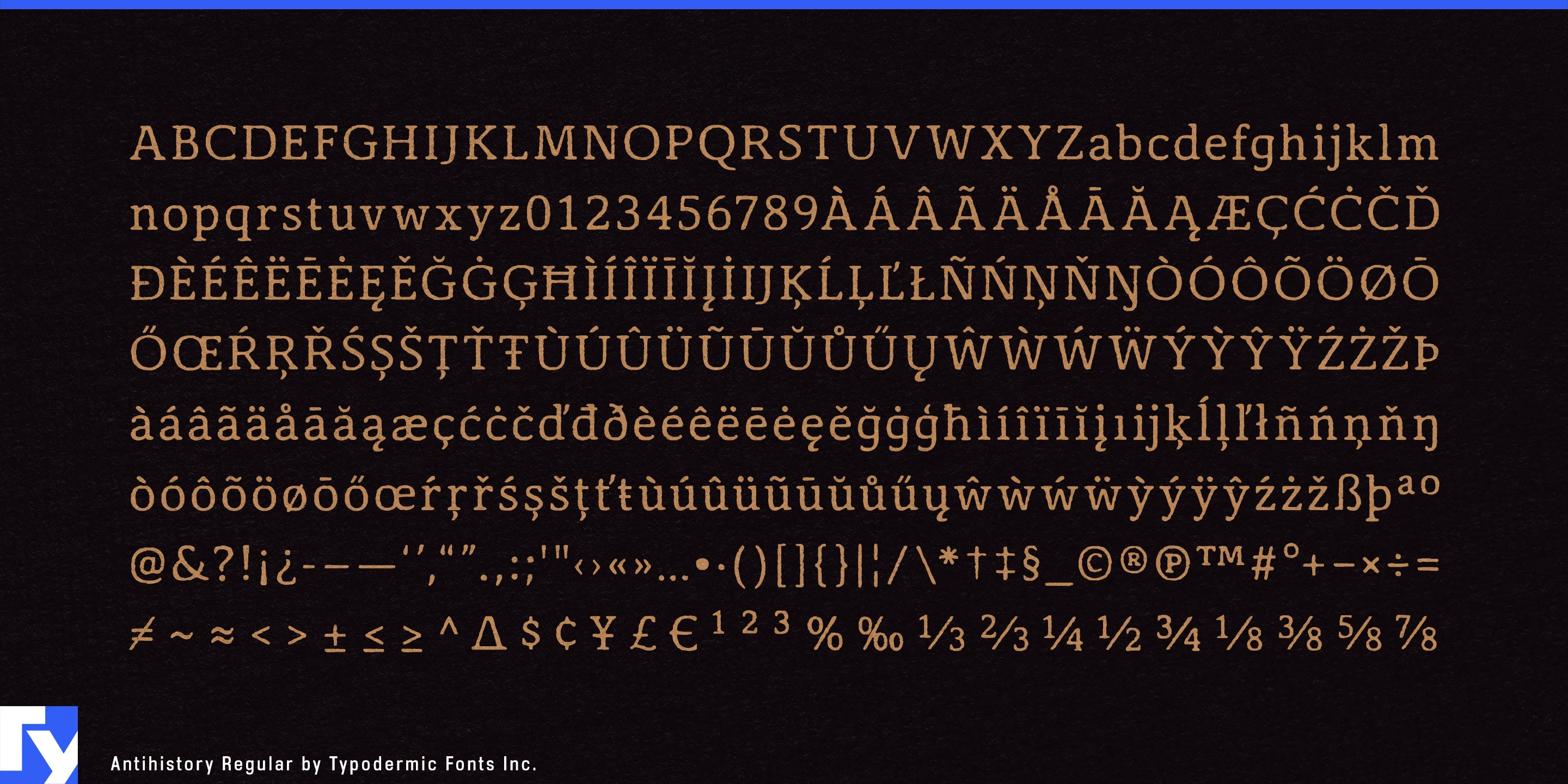
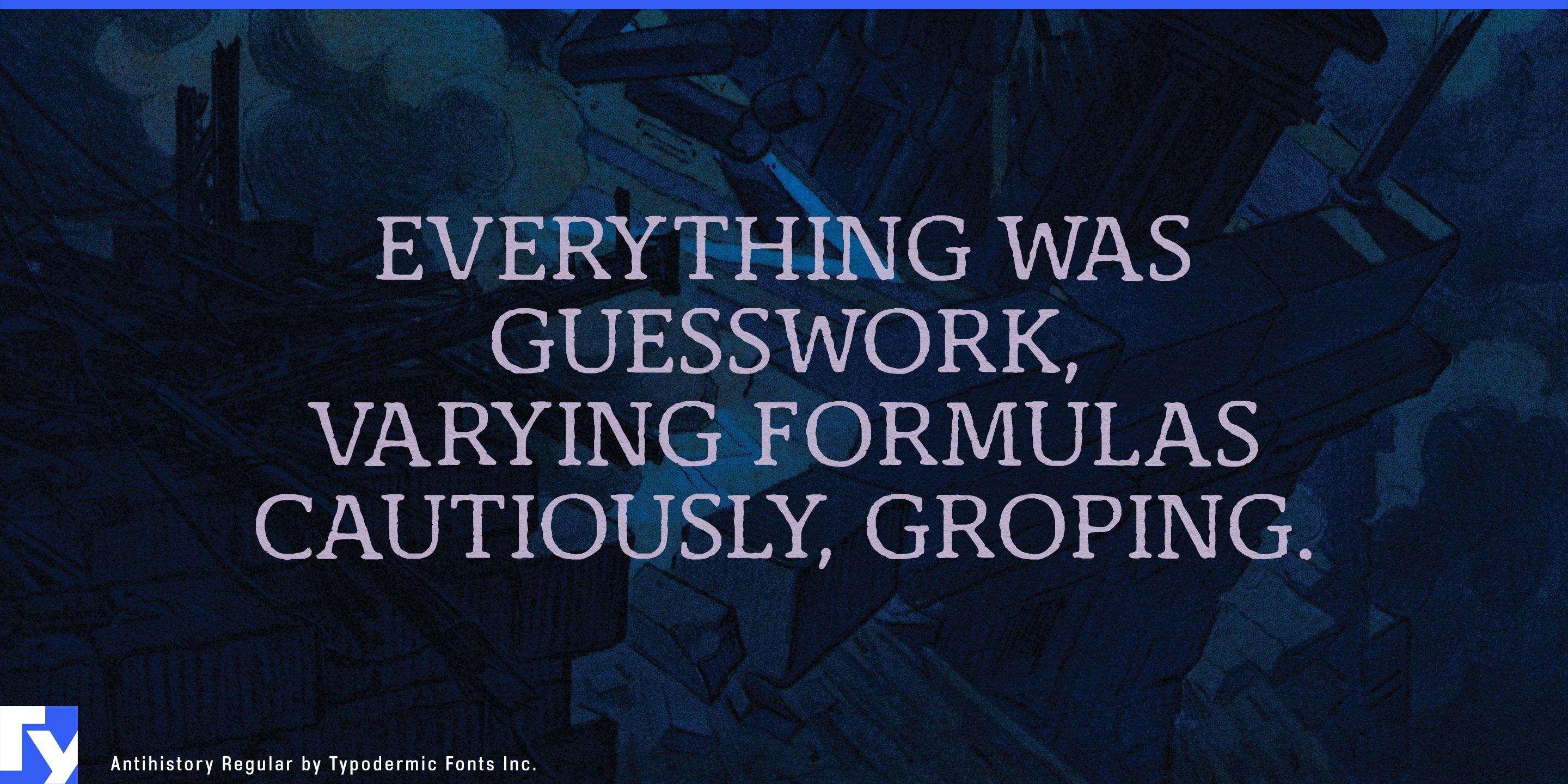
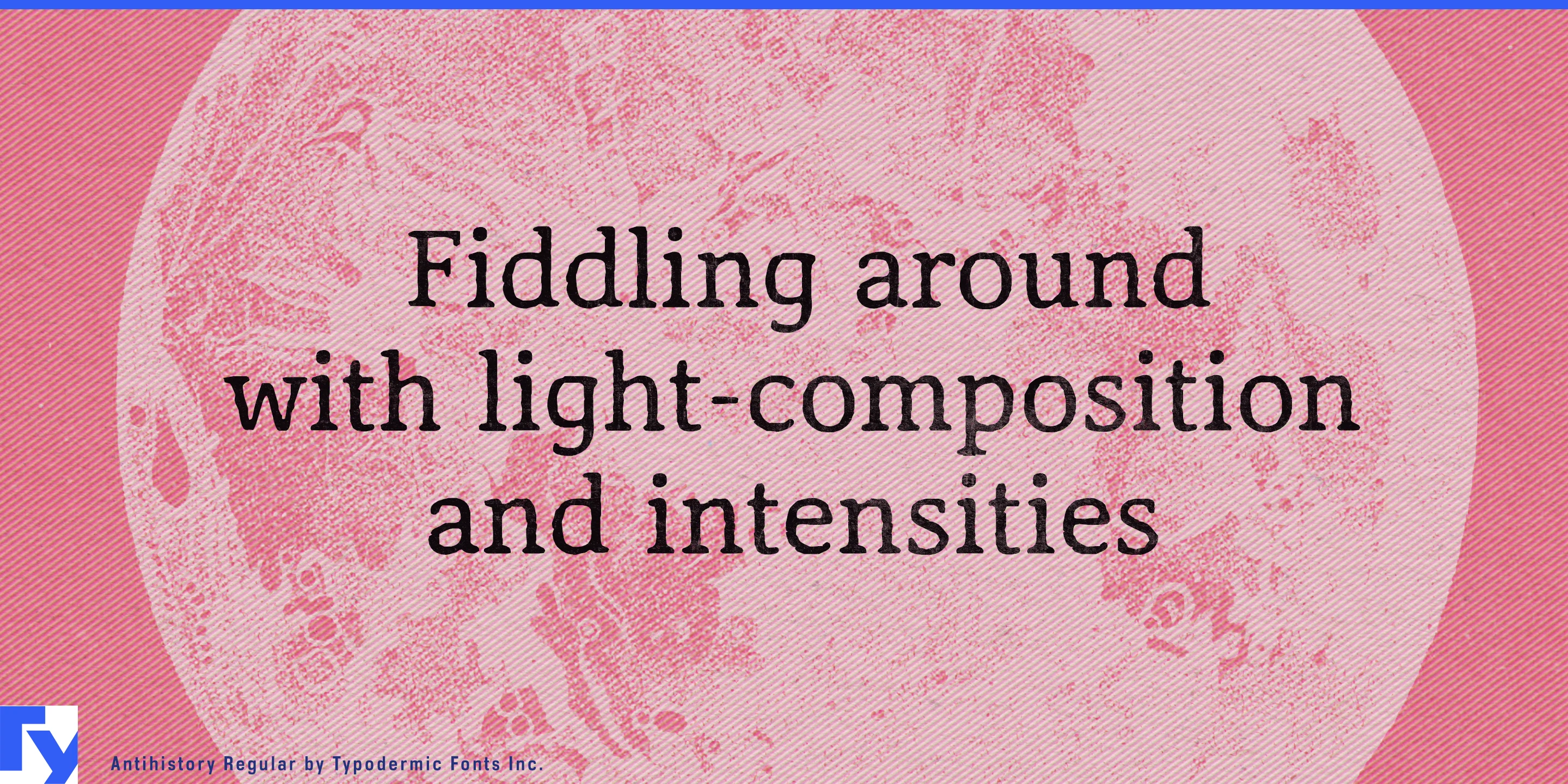
Historical typography is straightforward when the history is real. A Victorian broadside, wartime notice or mid-century report comes with conventions a designer can research and reproduce. The problem changes when the document comes from a history that never happened. A period-accurate typeface can accidentally pin the artifact to a real place and decade; a modern serif with added distress can look conspicuously contemporary. Antihistory occupies the uncertain ground between them.
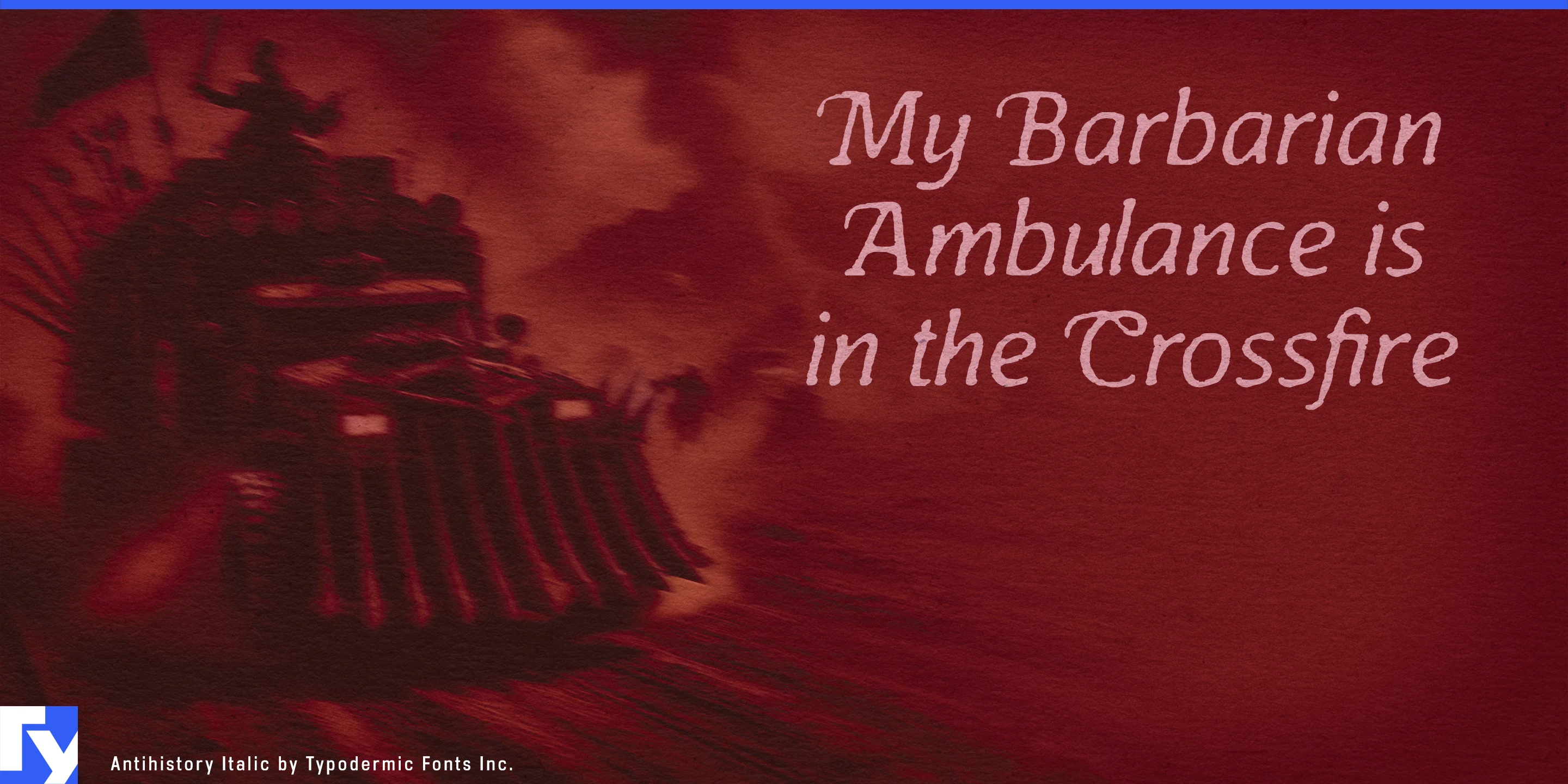
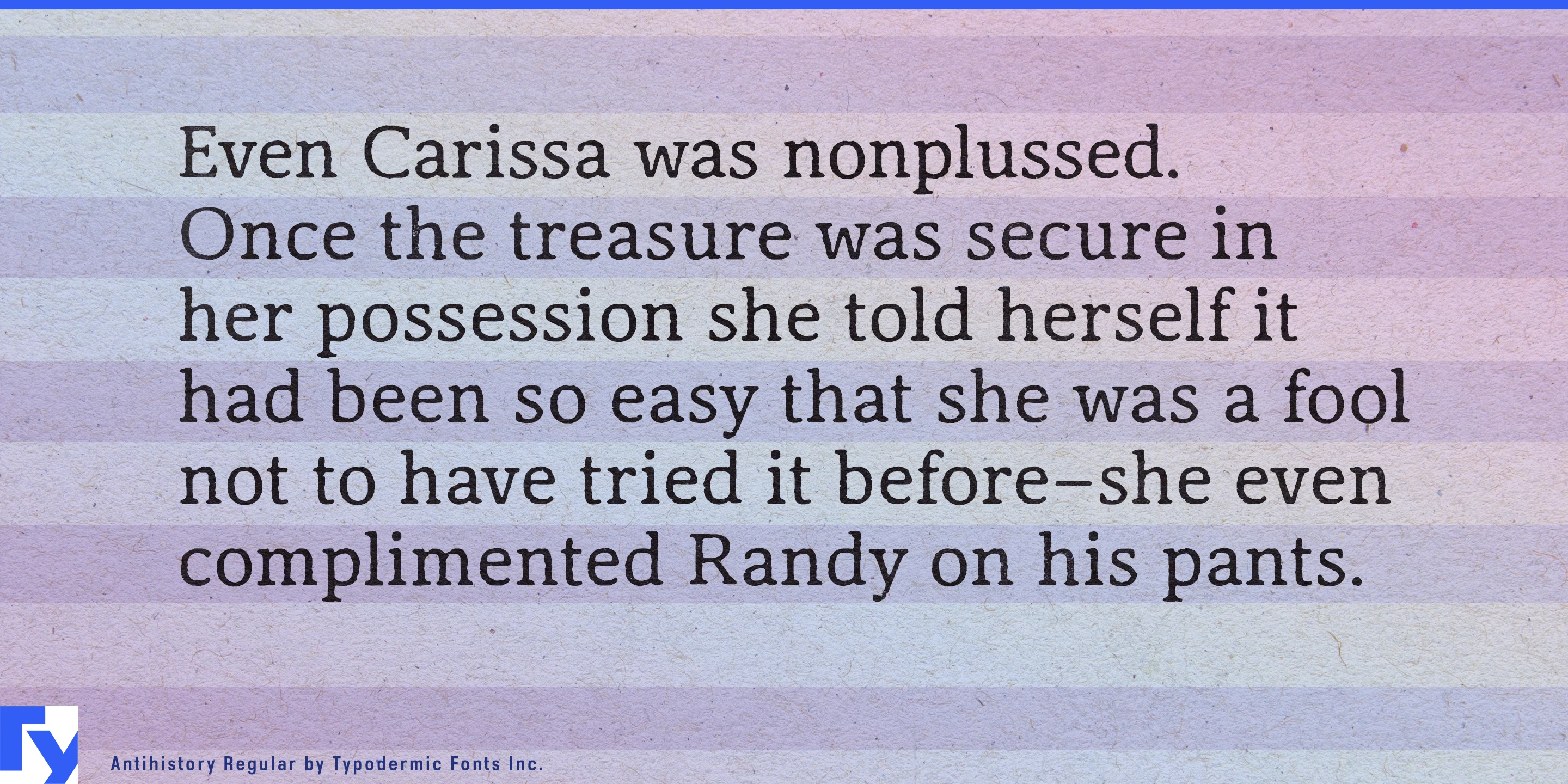
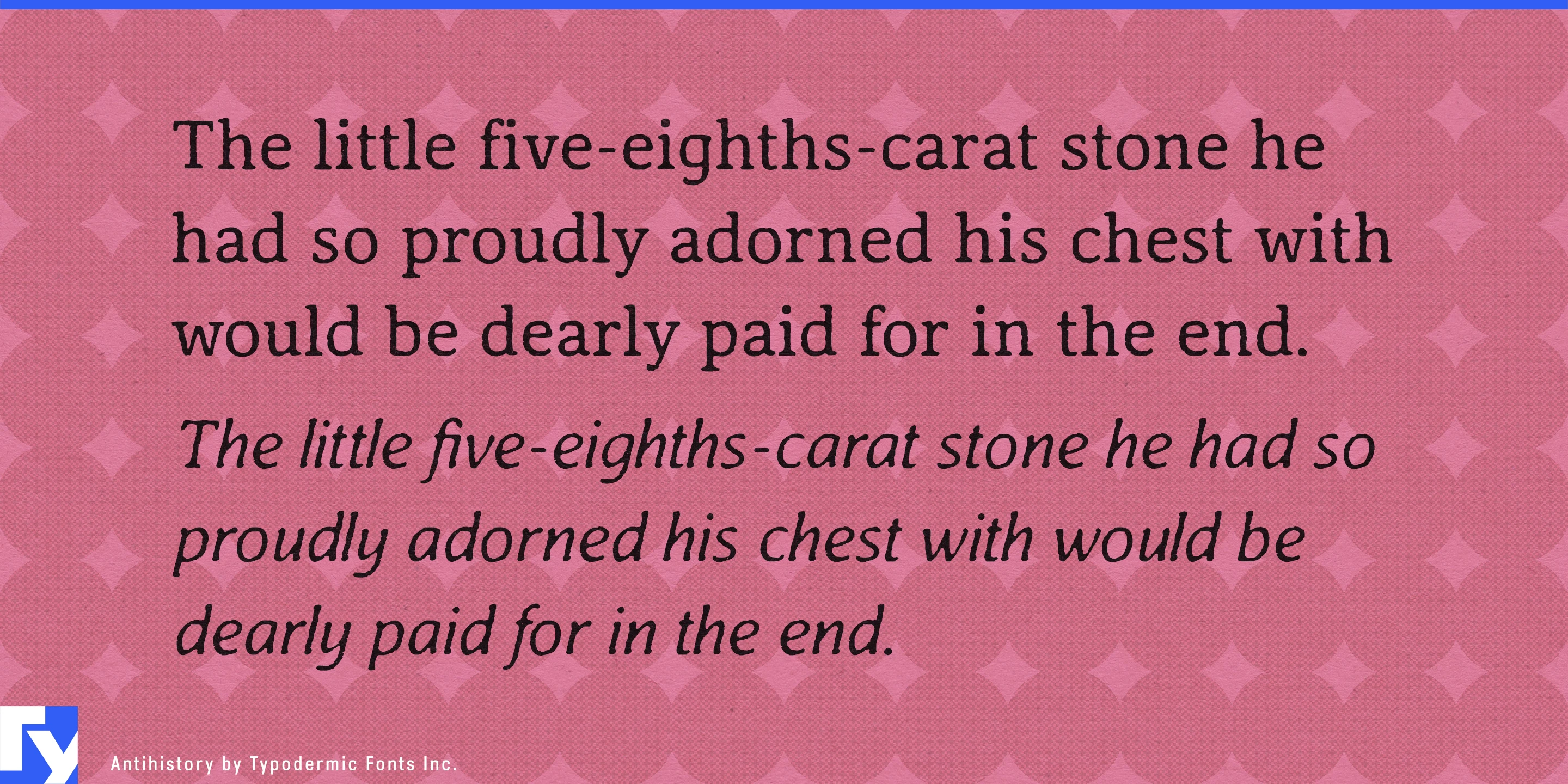
Antihistory began as contemporary serif typography deliberately pushed backward through artificial age. Its worn forms suggest printing, handling and deterioration without settling comfortably into a familiar historical category. Regular and Italic allow the family to handle more than titles; short passages, quotations, captions and document text can share the same invented provenance.
That makes Antihistory especially useful for fictional archives. Alternate-history games, speculative television, mystery productions and immersive narratives often need entire collections of evidence: institutional reports, expedition records, correspondence, research papers, case files and documents from organizations that never existed. Antihistory can give those materials a shared publishing voice without importing the unmistakable associations of a Victorian newspaper, military typewriter or twentieth-century government form.
Investigation games, conspiracy fiction and analog-horror environments can use it for the quieter parts of the archive: forgotten institutional publications, obscure academic papers, cult literature and recovered books. Because Antihistory can sustain readable passages, those artifacts can carry actual clues and narrative information rather than functioning only as background texture.
Speculative design offers another natural role. Foresight projects, design-fiction exhibitions and future scenarios often create reports, manuals, newspapers and institutional documents from events that have not happened yet. Antihistory can give a document created for tomorrow the visual residue of somebody else’s yesterday.
Alternate-history novels, weird fiction, speculative archaeology and faux-documentary publishing can use the same ambiguity for covers and reproduced documents. Antihistory is not historical reconstruction; its niche is invented provenance, giving fictional documents the appearance of having survived a past that never occurred.
Get Antihistory
Desktop licenses cover print, logos, and static graphics. MyFonts also offers embedding licenses for websites, e-books, and applications. Embedding licenses
Commercial font facts
Family details
- First released
- 2006
- Styles
- 2 styles
- Version
- 2.111
- Formats
- OTF
- Class
- Serif
- Scripts
- Latin
- Role
- Dual purpose
- Features
- Distressed, Alternates
Commercial style names (2)
- Regular
- Italic